What's the Best Soil Mix for a Raised Garden Bed?
Published August 13, 2026
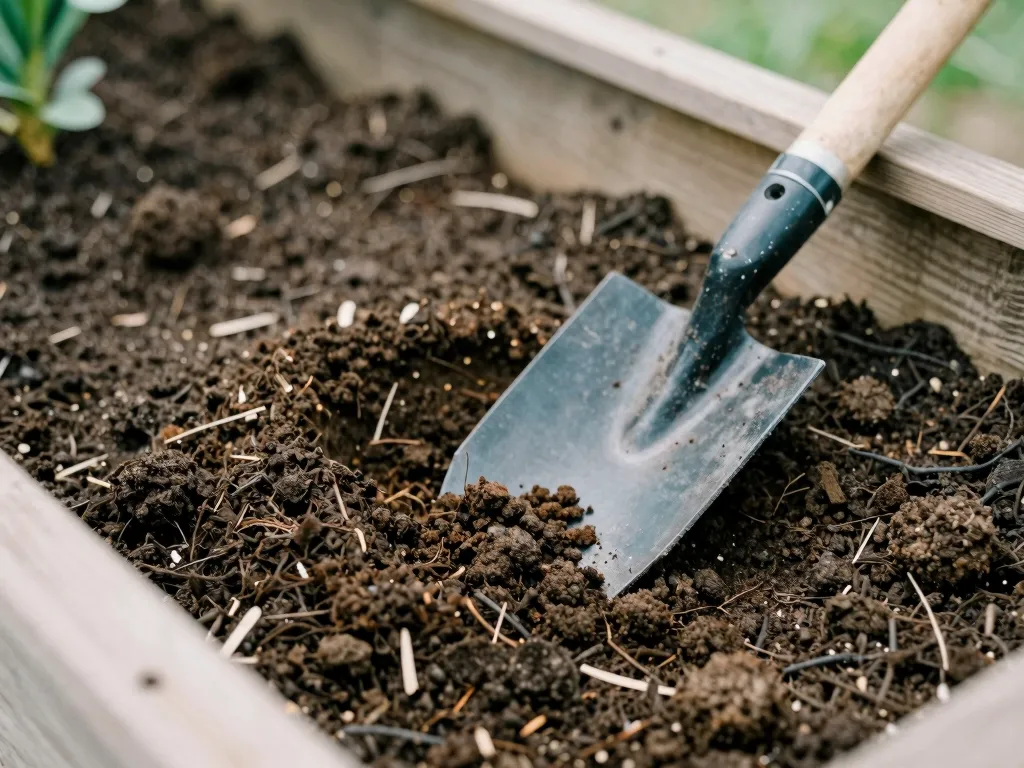
75% loam (or good-quality topsoil) mixed thoroughly with 25% finished compost is the most recommended base mix for a raised garden bed. That gives you a light, well-draining soil that still holds enough nutrients for healthy rooting and growth.
What the number depends on
How exactly you should mix your raised bed soil depends on what’s available and your goals. Loam or topsoil gives structure and anchoring for roots. Finished compost adds organic matter, nutrients, and moisture retention. If you’re in a dry climate or need extra drainage, adding coarse sand or perlite—say a third of the mix—helps. In wetter or clay-heavy areas, lean more on compost and loam for balance. Soil tests help you fine-tune pH and nutrient needs, but the basic 75/25 loam-to-compost ratio works in most situations (extension.umaine.edu).
Regional or condition-based variation
Some extension services offer slight variations. Penn State recommends 70% soil with 30% compost—very close to the 75/25 guideline (extension.psu.edu). Iowa State University suggests equal parts topsoil, organic matter (like well-rotted manure, compost, or peat), and coarse sand—so a 33/33/33 mix—if you need extra drainage or lighter structure (yardandgarden.extension.iastate.edu). In New Hampshire, they recommend 70% topsoil and 30% high-quality compost, but caution against exceeding 50% organic matter to avoid compacting or nutrient imbalance (ask.extension.org).
Common mistakes
Go too heavy on compost and you’ll end up with soil that retains too much moisture, compacts easily, or develops nutrient imbalances—especially if that compost isn’t fully cured. Too much sand dries out quickly and doesn’t hold water—or nutrients—well. Sudden layering without mixing (like dumping compost on top of loam without blending) can create a barrier that blocks roots and disrupts drainage. That’s why Irish State and Massachusetts extensions emphasize mixing soil thoroughly and avoiding distinct soil layers (yardandgarden.extension.iastate.edu).
Cost and timing considerations
Buying bulk loam and compost is usually more cost-effective than bags—but availability varies by location. Alabama’s extension provides cost estimates: topsoil runs $1–2 per cubic foot in bulk and $2–7.50 per cubic foot in bags. Compost and soil conditioners are slightly cheaper in bulk, around $0.80–1.50 per cubic foot (aces.edu). Expect soil volume to settle over time as organic matter breaks down—plan to refresh the top layer with compost annually or every couple of years (aces.edu).
What to ask your supplier or contractor
Ask for a soil test or details on loam composition—does it contain fines, clay, or silt? Make sure compost is fully finished (mature and stable) and screened to remove large chunks. If you’re using sand or other drainage material, request coarse grade. Ask for delivery in bulk by cubic yard or foot, and double-check that the mix will closely follow your desired ratio—75% topsoil/loam, 25% compost. You can also ask to sample it ahead of time or inquire about pH and salt content if compost is manure-based (aces.edu).
Closing recommendation
Once you’ve got that 75/25 loam-to-compost mix settled into your boxes, top it with mulch and let it settle a bit. Every season you’ll see how it performs and know whether to adjust the compost or drainage mix next year. When you’re ready to figure out exactly how much soil your raised bed needs, head over to the Raised Bed Planner
Sources
- What is the correct soil composition for a raised bed vegetables garden? - Cooperative Extension: Garden and Yard - University of Maine Cooperative Extension
- Soil Health in Raised Beds
- What would be a good soil mix for a raised bed? | Yard and Garden
- Phone 3/17 - What kind of soil for raised beds? - Ask Extension
- Raised Bed Gardening - Alabama Cooperative Extension System