How Much Soil Does a 4x8 Raised Bed Need?
Published August 13, 2026
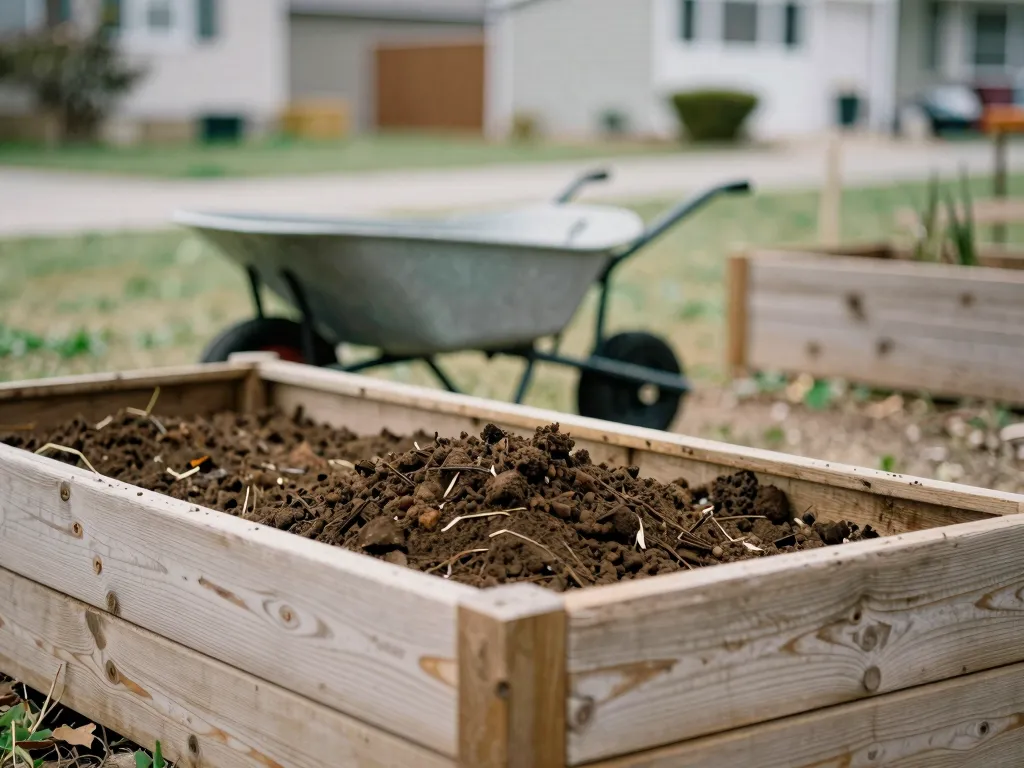
About 1 cubic yard of soil mix will fill a 4 × 8 ft raised bed to a depth of about 12 in.
What the number depends on
That one‑cubic‑yard figure assumes a 4 ft × 8 ft bed built to a depth of about 12 in (one foot). The University of Florida’s Extension notes that filling such a bed typically takes approximately one cubic yard of soil mix. (blogs.ifas.ufl.edu)
What to fill it with
Extension services recommend several reliable soil‑mix recipes:
- A balanced mix of about 50–75 % topsoil and 25–50 % compost (or alternately 50 % topsoil, 30 % compost, 20 % other organic amendments like leaf mold or well‑rotted manure) (ask.extension.org).
- A 3‑way mix combining equal parts topsoil, organic matter (compost, well‑rotted manure, or peat), and coarse sand (yardandgarden.extension.iastate.edu).
- A 70:30 blend of topsoil to compost. (extension.psu.edu)
Those mixtures give you a balance of drainage and fertility—choose based on the materials you can access and your local climate.
How it varies by region or condition
You may need to adjust depending on your climate or soil context. For instance, in dry or desert‑like places such as Bishop, CA, guidance suggests at least half the mix should be organic material (with half of that compost) to aid water retention; taller beds like 11″ allow a 1/3 compost to 2/3 sandy soil mix to work well (ucanr.edu). Northern regions prone to freeze–thaw cycles may benefit from a mix of 60–70 % topsoil and 30–40 % compost, or a 30/30/30 mix of topsoil, compost, and coarse mineral amendments like sand, to maintain structure and drainage (ask.extension.org).
Common mistakes and why they matter
- Using too much compost can lead to nutrient overload and poor drainage, especially if the compost is woody—this may tie up nitrogen (ask.extension.org).
- A sharp boundary between bed fill and underlying soil can impede water movement and root growth; UF/IFAS and WSU recommend mixing each newly added layer into the soil below to avoid this “hard pan” (pubs.extension.wsu.edu).
- Relying heavily on pure topsoil or dense landscaping fill without considering drainage or organic content can leave you with beds that compact or dry out too quickly (pubs.extension.wsu.edu).
Cost or timing considerations
UF/IFAS notes that one cubic yard typically costs between $30 and $60 for a 4 × 8 × 12 in bed (blogs.ifas.ufl.edu). Organic materials decompose over time, so expect settling—you’ll likely need to top off your beds seasonally to keep them full (blogs.ifas.ufl.edu).
What to ask your supplier or contractor
- Ask whether the topsoil is truly loamy and screened, not contaminated—especially if it comes from off‑site (pubs.extension.wsu.edu).
- Confirm the compost is well‑rotted and mature—unfinished compost can immobilize nutrients (ucanr.edu).
- If they offer a blend, ask for the composition percentages—especially of topsoil vs. compost vs. any sand or mineral additives—so you can ensure it matches one of the recommended mixes above.
Wrap‑up
About 1 cubic yard of soil mix will fill your 4 × 8 raised bed to around 12 in deep. Choose a mix rich in both nutrients and drainage, avoid sharp layering, plan to top off as the mix settles, and vet what your supplier calls “topsoil.” Once you’ve settled on a mix that suits your soil, climate, and bed design, you’re ready for planting.
Now get exact numbers for your project with the Raised Bed Planner
Sources
- Raised Bed Gardening 101 - UF/IFAS Extension Leon County
- Garden bed soil - Ask Extension
- What would be a good soil mix for a raised bed? | Yard and Garden
- Soil Health in Raised Beds
- Inyo and Mono Counties Cooperative Extension
- Raised Vegetable Garden Bed First/Base Layer - Ask Extension
- Raised Beds: Will They Benefit Your Vegetable Garden? (Home Garden Series) | WSU Extension Publications | Washington State University
- Univ. of California Cooperative Extension