How Much Paver Base Do You Need?
Published August 13, 2026
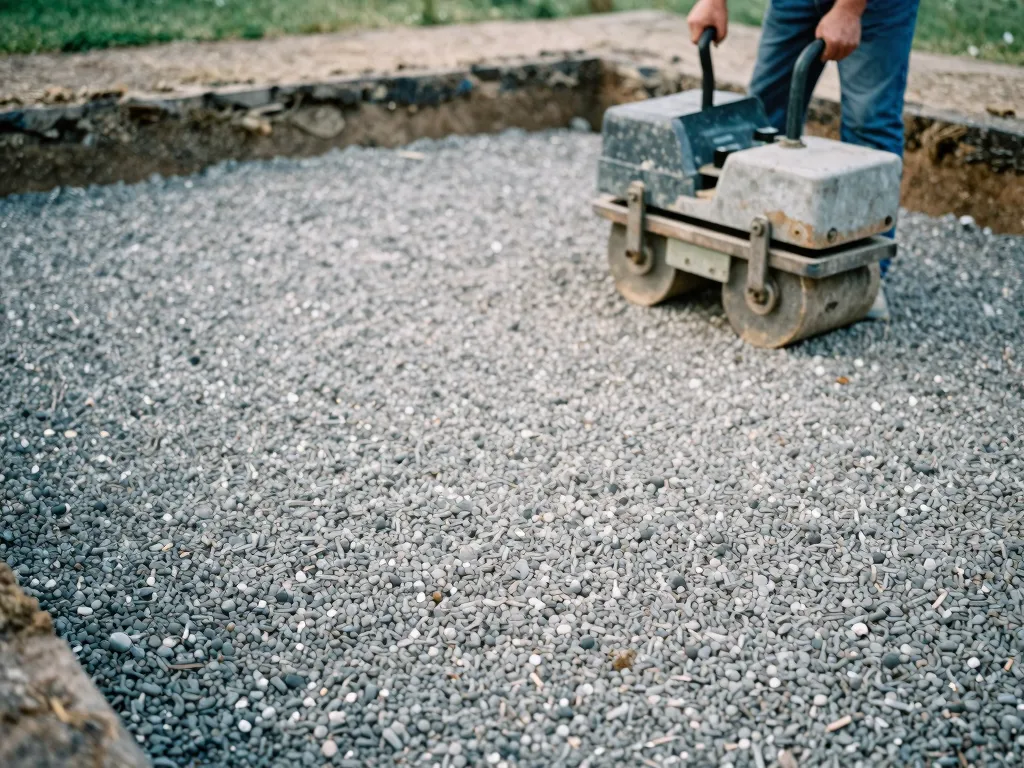
4 to 6 inches of properly compacted crushed stone base under your pavers, topped by exactly 1 inch of bedding sand.
Why that number matters
That 4–6 inch depth comes straight from university-grade and trade‑association standards for pedestrian patios—it’s the foundation holding the whole thing together. The Concrete Masonry and Hardscapes Association (CMHA) lays out a 4‑inch gravel base for patios and walkways in ideal conditions and increases that to 6 inches (or more) for applications like driveways or in less stable soils (cmha.org). Similarly, civil engineers note that pedestrian areas typically require a crushed aggregate base of 4–6 inches, increasing to 6–12 inches under heavier loads like vehicle traffic (engineerfix.com).
What it depends on
- Soil strength and drainage: Weak, clay‑rich, or poorly draining soils need a deeper base to prevent settling and frost heave.
- Climate: In freeze‑thaw regions, aim for the higher end of that range; the deeper, well‑draining base helps counter frost expansion (affordablepatio.com).
- Traffic load: Patios used for heavy furniture or occasional vehicles may need more depth; driveways demand 6–8 inches minimum (figurecalc.com).
- Compaction quality: Even 4 inches won’t do if it isn’t compacted layer by layer—proper compaction matters as much as depth (landscapingcalc.com).
Regional variation
You’ll see subtle differences depending on climate. For example, New Hampshire installers emphasize the importance of a 4–6 inch crushed stone base to counter frost heave, pointing out a shallow base fails much faster in heavy freeze‑thaw conditions (affordablepatio.com). In warmer regions with stable subgrade, 4 inches may suffice—but that’s the minimum.
Common mistakes you’ll want to avoid
- Too shallow a base: Skimping on depth leads to settling, unevenness, pooling water, joint sand washout, and frost heave (figurecalc.com).
- Bad material: Rounded gravel like pea gravel doesn’t interlock; use angular crushed stone such as dense‑graded aggregate or crusher run (affordablepatio.com).
- Skipping compaction or doing it poorly: Always compact the base in 2–3 inch “lifts” until it achieves at least 95% Proctor density (landscapingcalc.com).
- Wrong bedding sand depth: The bedding sand must be exactly 1 inch deep—any more leads to movement; less compromises levelness (affordablepatio.com).
- No edge restraints: Without firm edging, pavers drift outward over time—even a solid base can’t hold them if the edge isn’t locked (contractorcalculatorpro.com).
Cost and timing considerations
Adding depth costs more in material and time. But those upfront costs pay off when the patio lasts decades without redoing. Most installers build in 12–15% overage for base material (not just 10%) to account for compaction and grade variation (landscapingcalc.com). And compacting properly slows progress, but saves labor—and heartache—down the road.
What to ask your supplier or installer
- “Is the crushed stone angular and dense‑graded, not rounded?”
- “How many inches of base are you installing, and how deep into the excavated soil are you going?”
- “Will you compact in 2–3 inch lifts to 95% density?”
- “How thick will the bedding sand be? You should hit exactly 1 inch.”
- “Will you install a stiff edge restraint to hold pavers in place?”
Worked example
For a 200‑square‑foot patio with about 60 feet of edge, the computed result is: area sq ft: 200; paver count: 220; base depth inches: 4; base volume cubic yards: 2.5; bedding sand depth inches: 1; bedding sand bags: 34; edge restraint feet: 60; polymeric sand bags: 2.
If you’re ready to build with confidence, let our planner give you the precise quantities for your project. Paver Patio Planner
Sources
- Proper Concrete Paver Base and Depth: What to Know and Why It Matters - Concrete Masonry and Hardscapes Association
- How Thick Should a Paver Base Be? - Engineer Fix
- Patio Paver Base Explained: What Goes Under Your Patio and Why It Matters
- Paver Base Depth Guide for Patios and Driveways | FigureCalc
- Paver Patio Base Preparation | LandscapingCalc
- Paver Base Guide: Proper Depth & Materials for Patios | Contractor Calculator Pro