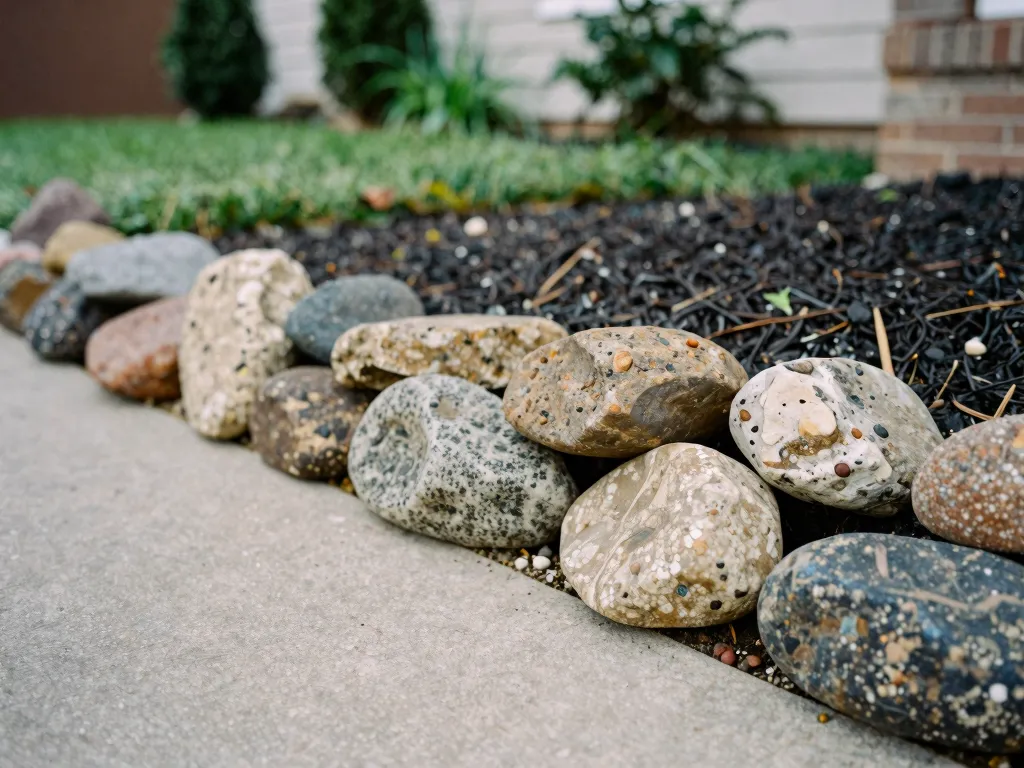
The right depth for most landscape rock installations is 2 to 4 inches, depending on rock size and use.
What the depth depends on
Smaller stone (½ to 1 inch, like pea gravel) works well at 2–3 inches deep. Medium-size rock (1–3 inches) needs about 3 inches. Larger decorative rock (3–5 inches) should be set 3–4 inches deep to fully cover the ground and block weeds (landscapeunite.com). Walkways or high-traffic areas benefit from 4 inches or more to prevent rocks from shifting (landscapeunite.com).
Earth Stone Rock lays out a simple rule: rock depth should be 1.5 to 2 times the stone diameter. That means a 1-inch stone needs 2–3 inches of depth, and a 3-inch stone needs 3–4 inches (earthstonerock.com).
Regional or material variation
Some materials, like 1–2 inch black lava rock, come with manufacturer-specific guidance. Lava rock at 3–3.5 inches depth covers about 90–100 square feet per cubic yard, and 4 inches depth covers about 80 square feet per yard (rockutah.com). That helps when you’re planning how much to order.
For applications around structures—particularly in wildfire-prone zones—rock of 1–1½ inch size should still be at least 2 inches deep over weed barrier to keep embers away and hold the fabric in place (assets.bouldercounty.gov).
Why those variables matter
Depth affects both weed suppression and visual coverage. Too shallow, and the fabric shows through as rocks shift—or weeds, exposed soil, and even frost heave can undo your work (bloomingexpert.com). Deeper than necessary costs more without adding benefits and even makes cleanup harder (journeymanhq.com).
Common mistakes
- Skipping proper base prep: dumping rock on loose soil leads to sinking and uneven surfaces (journeymanhq.com).
- Using cheap or non-draining fabric: that traps water and fails to suppress weeds effectively (coloradolandscapedesign.com).
- Installing too shallow: exposes fabric, weak weed control, and shifting stones (bloomingexpert.com).
- Going too deep: unnecessary cost, poor drainage, and harder long-term maintenance (journeymanhq.com).
Cost or timing considerations
Heavier depth boosts material costs and delivery weight—but underestimating depth can double costs when you need to top up a year later. Manufacturer data like coverage per cubic yard (especially for lava rock) lets you estimate ordering more accurately (rockutah.com).
What to ask your supplier or contractor
- Confirm rock size range and ask what depth they recommend for coverage and weed control.
- Ask for coverage rates—e.g. square feet per cubic yard at specific depth. Lava rock often already has that on its product sheet (rockutah.com).
- Make sure you’ll get woven, permeable fabric (not plastic) and proper edging material.
- Ask how they’ll prep the base—whether they’re compacting soil or doing a gravel subbase for stability (journeymanhq.com).
Worked example
A worked example: a 150 sq ft bed using medium-sized rock (¾–1 in). The computed result is: area sq ft: 150; depth inches: 3; volume cubic yards: 1.5; estimated tons: 2.1.
Next steps
You’ve got the depth recommendation and know what questions to ask—now get your exact numbers using the Landscape Rock Planner