How Many Pavers Do You Need for a Patio?
Published August 13, 2026
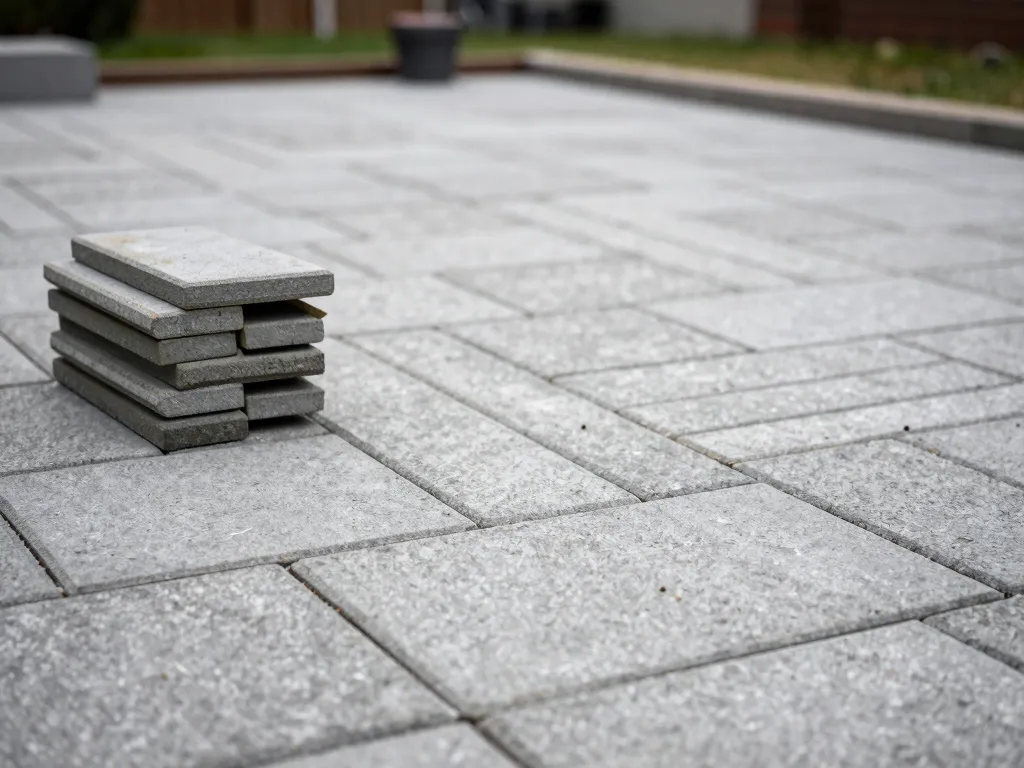
12x12 ft patio using 12x12‑inch pavers requires exactly 144 square feet of area, 159 pavers, a 4‑inch deep base totaling 1.8 cubic yards, a 1‑inch bedding sand depth using 24 bags of bedding sand, 48 feet of edge restraint, and 2 bags of polymeric sand.
What the Number Depends On
The number of pavers and related materials depends on how big your patio is, what size pavers you’re using, and how deep the layers need to be. Patio size and paver size determine how many pavers you need. Base depth depends on the ground beneath and your climate—frost, clay soils, and poor drainage often demand deeper base layers. Bedding sand depth is pretty standard around 1 inch, but if you’re on soft soil you might boost that or aim for more compaction. Edge restraint length obviously depends on perimeter length. For polymeric sand, the width of the joints matters—a narrow joint needs less sand than a wide one. Those are all real, practical factors.
Regional or Condition Variations
Climate plays a big role in how deep your base should be. In cold regions, the base needs to go below the frost line, which often demands 6 inches or more of compacted gravel (citation [to be added]). Clay soils that shrink and swell may require a thicker base or drainage improvement to avoid settling or movement. If you’re laying pavers over a slope or poorly draining soil, the base material and drainage approach become more critical to avoid shifting and pooling water. That influences not just how deep your base is, but whether you need geotextile fabric or a subdrain layer.
Common Mistakes to Avoid
Skipping or skimping on edge restraints is a frequent DIY error that often shows up as paver creeping, bulging borders, or disappearing joint sand (rochestercp.com). Edge restraints aren’t decoration—they hold the whole system together. Polymeric sand mistakes often stem from applying it over damp pavers, missing joint depths or widths outside the product’s spec, or failing to protect during curing. That leads to washout, haze, or weakened joints (rochestercp.com). Rushing compaction before sweeping in sand can leave uneven surfaces or dislodged pavers. Always clean the surface completely, sweep sand in thoroughly, compact again, and then activate and cure properly under dry, calm conditions (diyproject.ai).
Cost or Timing Considerations
Base materials like crusher run or gravel often cost more in high frost areas due to depth requirements. Bedding sand adds material costs too, especially if you’re buying by the bag. Edge restraint options range from inexpensive plastic to more durable aluminum or concrete, which costs more upfront but lasts longer (rochestercp.com). Polymeric sand bags usually cover between 45 and 75 square feet per bag depending on joint characteristics (actionsupplynj.com). Timing matters—a window of 24–48 dry hours is usually required for sand to cure before getting wet again; heavy rain during that period can ruin the work and force re-sanding (diyproject.ai).
What to Ask the Supplier or Contractor
Ask if the base depth they’re installing meets local frost and soil requirements. Confirm whether bedding sand meets ASTM C33 or equivalent standards (hanoverpavers.com). For edge restraint, ask that it extend down into the compacted base—not just sitting on the soil—and that it provides at least 1 inch of vertical contact with the side of the paver (cmha.org). With polymeric sand, match the product to your specific joint width (often ¼–1½ inches), climate, and traffic load—and ask for installation guidelines to follow carefully (rochestercp.com). Also ask about curing and protection steps—will they ensure rain won’t hit the patio during that vulnerable period?
Close
Now that you know how to turn your patio dimensions into exact material needs, you can use the numbers above as a reliable start—or zero in on your own layout and conditions with confidence. Get your exact numbers with the Paver Patio Planner
Sources
- Edge Restraints for Pavers: Types, When You Need Them, and How to Install Them Right | Rochester Concrete Products
- Polymeric Sand: How to Apply It and Avoid Paver Joint Sand Mistakes | Rochester Concrete Products
- Free Paver Patio Installation Guide - Base Prep, Patterns & Polymeric Sand | DIYProject.ai
- 51135.qxd
- Installation Guidelines for Residential Applications
- Construction of Interlocking Concrete Pavements - CMHA