How Deep Should Mulch Be?
Published August 13, 2026
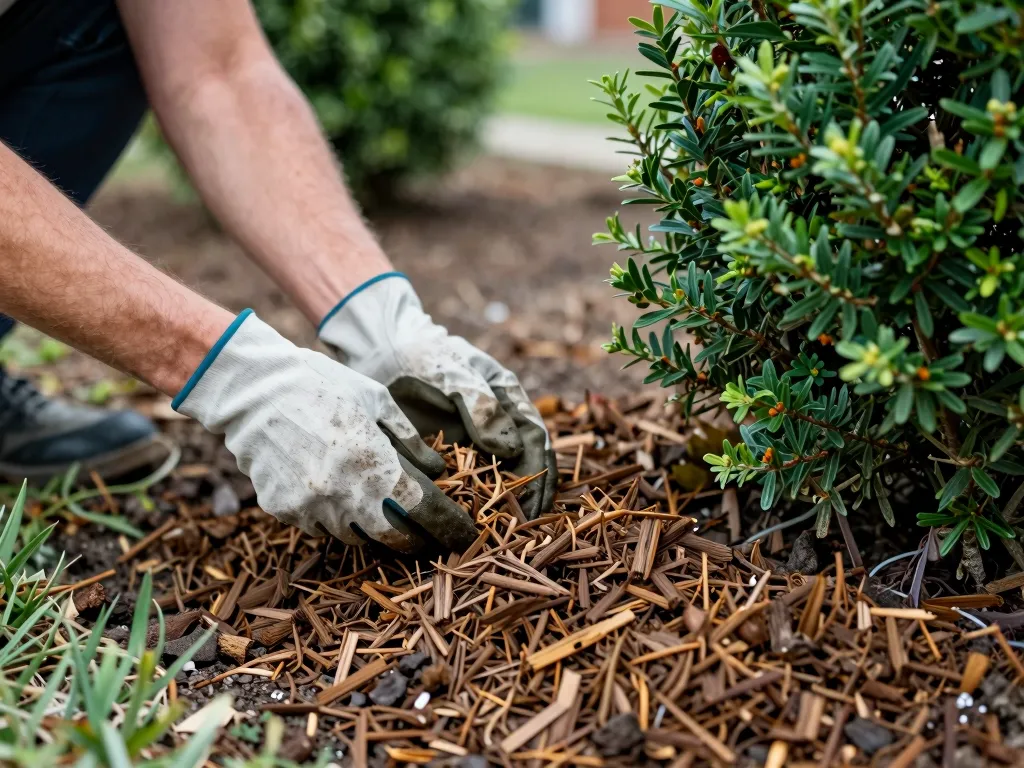
The ideal layer of mulch is generally 2 to 4 inches deep.
What the number depends on
That 2–4-inch range comes up consistently because it balances key functions. Too thin, and mulch doesn’t suppress weeds, conserve moisture or regulate soil temperature effectively. Too deep, and it can smother plant roots, reduce oxygen exchange, increase risk of rot, and suffocate the soil (yardandgarden.extension.iastate.edu).
Different materials and contexts shift the sweet spot within that range. Coarse, chunky mulches—like wood chips or bark—are fine at the higher end of 3 to 4 inches. Finer textures—grass clippings, shredded leaves, or finely shredded bark—work better at 2 to 3 inches, because they pack down and resist air and water penetration if too thick (ucanr.edu).
Seasonal or climatic variation matters too. On well-drained soils in drier climates, a 3–4-inch layer helps minimize drought stress. On heavy soils or in wetter regions, staying with 2–3 inches helps avoid waterlogging (store.extension.iastate.edu).
How it varies by region or material
Extension programs across the country echo these guidelines:
• University of Missouri advises 2 to 4 inches on trees and shrubs, warning that deeper applications cut off oxygen and invite disease (extension.missouri.edu).
• University of California divides by texture: coarse mulches can be 4–6 inches deep, while fine mulches only need 2–3 inches (ucanr.edu).
• Penn State recommends 2 to 3 inches in home fruit plantings—enough to suppress weeds, hold moisture, and let water through to roots (extension.psu.edu).
• Colorado State University on weed suppression suggests a full 4 inches, but flags that going deeper risks poor air exchange (extension.colostate.edu).
Common mistakes and why they matter
A recurring mistake is the “mulch volcano”—piling mulch up against tree trunks. That keeps the bark moist, invites decay, impedes gas exchange, and attracts pests and pathogens (yardandgarden.extension.iastate.edu). Always pull mulch back several inches from the trunk, tapering it gently—donut, not muffin (ask.extension.org).
Another error is over-mulching. Exceeding 4 inches, especially with fine mulch, can block water and oxygen, cause anaerobic conditions, shallow roots, and unhealthy soil (yardandgarden.extension.iastate.edu).
Applying it too thin—under 2 inches—misses the benefits: weeds creep through, moisture escapes, soil doesn’t stabilize, and you’re re-mulching more often (yardandgarden.extension.iastate.edu).
Cost or timing considerations
Deeper mulch uses more material and raises cost—especially with bulky media like bark chips. On the flip side, very thin layers need frequent top‑ups, increasing labor and recurring cost (ucanr.edu).
Timing matters too: U.C. advises replenishing by early summer when winter rains have settled and before heat reduces mulch depth. Thin layers may need refreshing every 1–2 years, while deeper coarse layers last longer (ucanr.edu).
What to ask your supplier or check with a contractor
Ask about the mulch’s texture—fine or coarse—and verify its source. Fine shredded hardwood needs a thinner layer; bulkier chips let you go deeper. Confirm the volume carefully: depth in inches matters per square foot. Don’t rely on “bags will cover 50 sq ft”—ask how many cubic feet or yards you’ll need for 2–4 inches across your area.
If mulching trees, make sure they won’t pile against trunks and will keep the ring wide enough. Also, confirm they won’t use construction debris or contaminated mulch—it should be clean organic material.
Practical takeaway
Stick with a 2–4‑inch layer: choose 2–3 inches for fine-textured mulch or clay soils, and 3–4 inches for coarse material or sandy, dry contexts. Always pull it back from stems or trunks. That gives you effective weed control, moisture retention, temperature buffering, with good air and water flow.
Done right, it cuts work, plants stay healthy—and tanks of mulch don’t go to waste.
Get your exact numbers with the Mulch Project Planner