How Deep Should a Gravel Driveway Be?
Published August 13, 2026
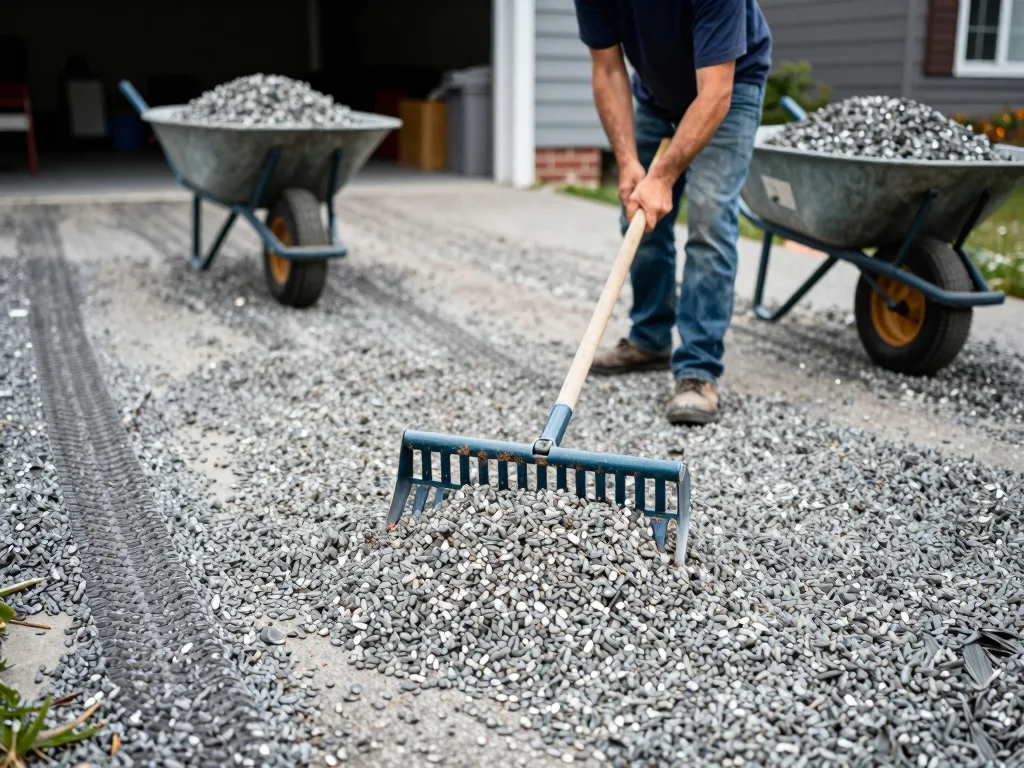
A properly built gravel driveway typically needs about 10–12 inches of total depth—usually divided between a compacted sub-base of around 6 inches and a surface layer of 4–6 inches. In some regions, installers use 4–6 inches of base aggregate with 2–4 inches of surface stone, totaling 6–10 inches above the native subgrade. These guidelines come from local experts and industry norms.(all-american-asphalt.com)
What the Number Depends On
Several site-specific factors will change how deep your gravel driveway needs to be:
- Soil strength and drainage: Clay-heavy or poor-draining subsoil often needs a deeper base to avoid settling or frost heave.(all-american-asphalt.com)
- Vehicle weight and frequency: A driveway for SUVs or trucks may require deeper layering to resist rutting—10–15 inches total is common in heavier-use contexts.(egerexco.com)
- Local climate: In wetter or freeze-prone areas, plan on thicker gravel to keep the subgrade protected and promote proper water shedding.(fhwa.dot.gov)
- Existing base condition: If you’re just refreshing an existing driveway that already has a stable base, a 2-inch new surface layer may suffice.(calzivo.com)
Regional or Condition-Based Variations
- In New Jersey, contractors typically recommend 4–6 inches of base plus a 2–4 inch surface—totaling 6–10 inches. This work varies depending on soil, especially clay-prone zones.(all-american-asphalt.com)
- Some DOT-level guides for rural roads (though not directly residential), suggest gravel thickness from about 4.5 up to 11.5 inches depending on subgrade strength and truck traffic.(highways.dot.gov)
- Highway or EPA guidance recommends a minimum of 12 inches (300 mm) of gravel above natural ground, rising higher in wet climates or weak soils.(fhwa.dot.gov)
Common Mistakes and Why They Matter
- Using too little depth leads to rutting, potholes, or erosion as vehicles press gravel into weak subsoil.
- Skipping a proper sub-base and relying on loose stone alone causes instability—gravel shifts rather than supporting weight.(pavingexpert.com)
- Overloading with gravel depth can create a “gravel trap” where tires sink, making driving difficult.(pavingexpert.com)
- Ignoring base prep or compaction allows rain or traffic to disrupt the layers—compacting each layer is essential.(pavingexpert.com)
Cost and Timing Considerations
- Thicker gravel drives cost more in materials and labor—especially if excavation, compaction, or drainage prep is needed.
- If you live in a wet area, investing up front in a deeper base saves maintenance costs over time.
- On good, firm soil with light daily use, a thinner refresh can save money but still look and perform adequately—just know it may need topping up more often.(calzivo.com)
What to Ask a Supplier or Contractor
Make sure to ask:
- What thickness of base and surface gravel are you recommending, and why (soil type, traffic, climate)?
- What kind of gravel are you using for the base and for the surface—size, gradation, crushed vs. rounded?
- Will you compact each layer, and what’s the compacted thickness?
- If the soil is soft or clay-rich, do you plan to use geotextile, drainage, or build up the base deeper?
Hearing specific reasons based on your site is a good sign—generic one-size-fits-all responses may mean trouble later.
Final Thoughts
You’ll almost always perform better with at least 6–10 inches of gravel (base plus surface), especially if you understand how soil, climate, and use affect that number. A thin 2-inch layer is fine for light refresh on strong base, but new installations or heavy-use drives benefit from layering—typically 6–12 inches in total. Ask smart questions, insist on compaction, and match the depth to your ground and vehicles.
Get clarity on your exact numbers, then get your detailed coverage from the Gravel Driveway Planner
Sources
- Gravel Driveway Installation NJ | All American Asphalt
- How Deep Should My Gravel Driveway Be - Eger Excavating and Concrete
- FHWA - Center for Local Aid Support - Publications
- Gravel Driveway Depth & Overage Guide | Calzivo
- Gravel Roads Construction and Maintenance Guide
- Gravel, Cinder and Hoggin Paths and Drives | Pavingexpert