What's the Best Type of Gravel for a Driveway?
Published August 13, 2026
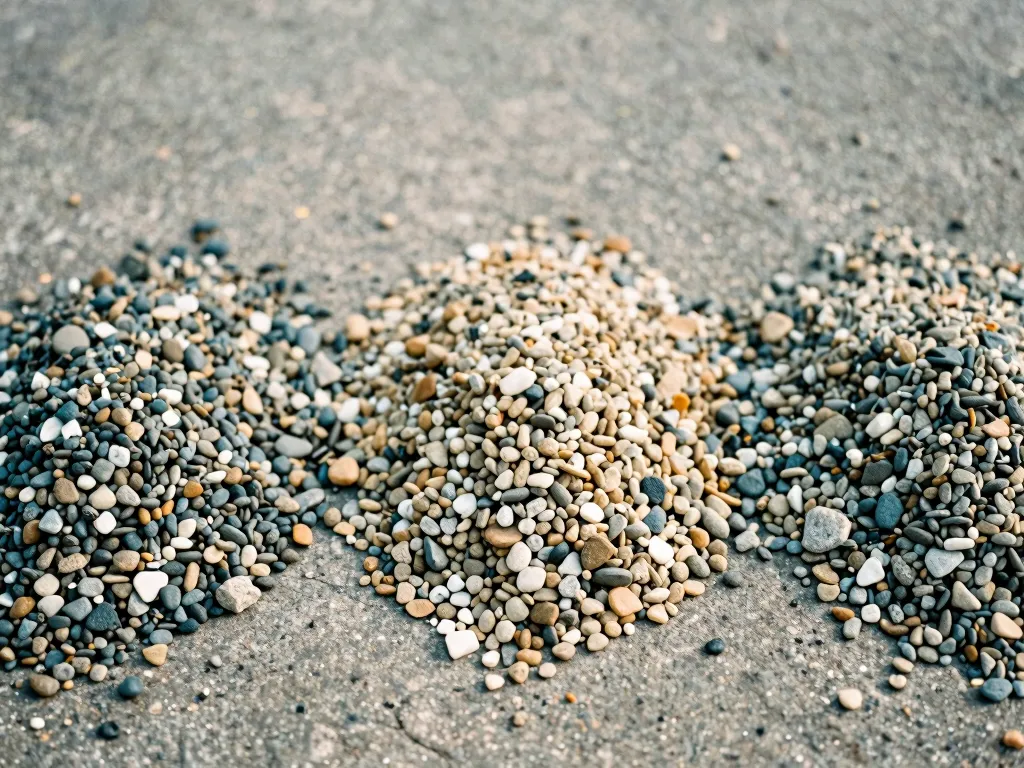
For most residential driveways, crushed stone grade #57 or #67 is the best choice for the surface layer, with #411 (a dense-graded mix of #57 and fines) offering a firmer finish when stability matters more than drainage.
Why those grades are the direct answer
Crushed stone #57 is the go-to surface choice in U.S. residential settings—it’s widely available, angular (so the stones lock together), drains well, and compacts into a stable layer (bovees.com).
Crushed stone #67 is nearly identical but finer and completely free of dust, making it even better for drainage-critical situations or when you want a cleaner look (bovees.com).
If you drive heavier vehicles, face freeze-thaw cycles, or prefer a tighter, harder surface, #411—which includes fines for compaction—is a strong alternative (bovees.com).
What the “best” choice depends on
Your driveway’s performance hinges on a few key factors:
- Do you need water to drain through the surface or run off? (#57/#67 for drainage, #411 for firmness) (bovees.com)
- How much load will the surface bear? Heavier vehicles benefit from denser aggregate like #411 (bovees.com).
- What’s your climate? In freeze-thaw zones, a compact, interlocked surface resists rutting and washouts better—making #411 a wiser choice (bovees.com).
- Aesthetic or clean-surface concerns? #67 offers a neater look thanks to its lack of dust and uniform sizing (bovees.com).
Regional or condition-based variations
While the grades stay consistent across most regions, stone type can vary—like trap rock in the mid-Atlantic due to its local hardness and wear resistance (bovees.com). If your soil drains poorly or the climate is wet, open-graded options (#57 or #67) will reduce standing water. Conversely, in drier regions or heavy-use zones, #411 is often preferred for its solidity.
Common mistakes and why they matter
- Choosing rounded stones like pea gravel. They don’t lock in place, shift under tires, and cause ruts over time (engineerfix.com).
- Skipping layers. A driveway’s durability depends on layered support—a coarse sub-base, then a binder or transition, and finally the surface. Omitting these kills performance (blog.harborsoils.com).
- Using too many fines in wet areas. That creates a muddy, unstable surface when saturated (bovees.com).
- Disregarding compaction techniques. Dense-graded materials like #411 need proper compaction in thin layers (no more than 3 inches per pass) for real hardness (bovees.com).
Cost or timing considerations
Deeper or denser materials cost more—you’ll pay more to truck in #411 than clean #57 or #67. Dense-graded materials also take longer to compact because fines must settle properly. Open-graded options compact faster but might need frequent regrading. Weather also affects installation timing—avoid laying open-graded stone right before heavy rain, since it drains but may shift under wet load unless compacted first.
What to ask your supplier or contractor
- Ask specifically for ASTM grade #57, #67, or #411 crushed stone, depending on your needs (bovees.com).
- Request a gradation certificate or sieve analysis to confirm the material matches the spec—especially important for materials like #411 that must contain fines (bovees.com).
- Confirm whether the product is washed (dust-free) or contains fines, based on drainage versus stability needs. #67, for example, must be dust-free (bovees.com).
- Ask about local availability—if #67 isn’t stocked nearby, #57 is a good substitute and often interchangeable (bovees.com).
Short closing
You’ve narrowed the surface down to #57 or #67 for drainage, or #411 for firmness; the rest is figuring out your sub-base and layers. Gravel Driveway Planner
Sources
- Crushed Stone Sizes and Gradations Explained
- Choose the Right Gravel Gradation and Fines for Driveways
- Guide to Choosing and Using Crushed Stone – The Foundation of Great Landscaping
- What Kind of Gravel Do You Use for a Driveway? - Engineer Fix
- Gravel Driveway Guide: Best Gravel, Cost & Install (Kitsap)